Impact Newsletter
Despite some public health wins in recent years, tobacco use continues to be the leading risk of heart disease, cancer, and strokes among Marion County residents.
Efforts of the Centers for Disease Control and Prevention, the Indiana Department of Health, MCPHD, and partners have reduced smoking rates, especially among youth.
However, our most recent data review in 2023 shows the percentage of current smokers in Marion County was 16.1%, compared to 10.8% for the United States and 18.2% for Indiana. In 2023, e-cigarette use is also higher in Marion County (8.6%) than in the United States (7%) and in Indiana (7.8%).
“So, while there has been great progress, there is much more work to be done,” said Sandra Cummings, the Administrator of MCPHD’s Chronic Disease Department.
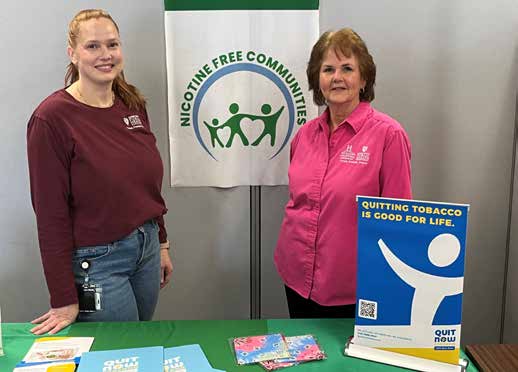
MCPHD’s Tobacco Program team promotes youth prevention activities, adult cessation resources, reduction of secondhand-smoke exposure, and works with the Nicotine Free Communities to improve public health in Marion County.
“We talk with teens about the harmful effects of tobacco use on their bodies,” said Andi Cox, MCPHD’s Tobacco Program Coordinator. “They know that tobacco is bad for them, but messaging around e-cigarettes or vaping devices is misleading, and once they start, it isn’t easy to quit.”
Addiction is tough for anyone to overcome. People report that it can take eight to ten tries before they are able to successfully quit, and teens sometimes have less access to tobacco cessation programs.
Indiana’s Quitline offers a variety of services to tobacco users. People can talk with counsellors, communicate by text messages, and can receive nicotine replacement therapies.
“You pick how to quit,” Cox said. “No matter where you are in your quit journey, we can provide free resources to get you there.”
After State legislators increased taxes on tobacco products, the number of people reaching out to the Quitline increased.
It is important for the tobacco prevention team to address tobacco use through compassion and evidence-based resources. Quitting cold turkey is a valid way to quit but is not easy. Combining counseling and medication gives people the greatest chance to quit and stay quit.
For more information about the Tobacco Program, call (317) 221-3007.
READ THE FULL NEWSLETTER