Fetal Infant Mortality Review
What We Do
The Fetal Infant Mortality Review (FIMR) program aims to better understand the loss of babies during pregnancy and up to 12 months of age in Marion County, Indiana, and to identify ways to prevent future tragedies.
By conducting case reviews and interviewing families, we hope to enhance the resources and services available to support mothers and families and save more babies. Pregnancy and Infant loss is a heartbreaking experience that affects countless families every day, yet it remains a largely unspoken issue. Many families feel isolated in their grief, struggling to find those who truly understand their pain.
FIMR seeks to change this by shining a light on the stories behind these losses. Through open dialogue and community engagement, we aim to create a support network for families, where sharing experiences can foster healing and understanding. By reviewing each case with compassion and a commitment to improvement, we can uncover patterns that might indicate where current resources fall short.
This could involve advocating for better prenatal care, education on safe sleep practices, or emotional support services for grieving parents. As one grieving mother expressed, “No one talks about the loss of an infant still occurring in the U.S. It’s such a taboo subject that very few people can discuss it or provide support after the loss.”
We believe that by breaking the silence, we can not only honor the memory of those we’ve lost but also empower families with the knowledge and support they need. Through collaboration with healthcare providers, community organizations, and families, FIMR is dedicated to creating a future with fewer pregnancy and infant losses, fostering resilience and hope for all mothers.
Our Team
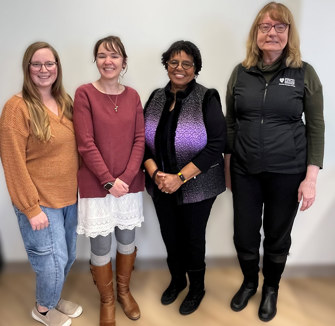
(From left to right)
Lynette Troyer, Maire Stocking, Sandra Minor and Teri Conard
FIMR Process
- Data Gathering: When a fetal or infant death occurs in Marion County, the Vital Records Department notifies us. We collect medical information and conduct interviews with the mother and family, either in person or by phone. We also may send a survey to understand the mother's experience. All personal information is kept confidential, and we create a summary of the case.
- Case Review: The case summary is reviewed by a Case Review Team (CRT), which includes professionals from various organizations. The team identifies gaps in care and discusses questions like what may have contributed to the death, or whether the family accessed necessary services. They make recommendations to improve maternal and child health services.
- Community Action Team (CAT/CAN): The CAT/CAN meets quarterly to turn recommendations into actions. This group helps implement solutions to the problems identified by the CRT. The CAT/CAN is organized into two work groups to focus on specific issues. Overall, FIMR seeks to enhance the services available for mothers and infants to prevent future deaths.
Youth: TBD
Moms: TBD
D.A.D.D.s: Last Friday of the month from 1 to 2 p.m.
Grandparents & Caregivers: Third Thursday of the month from 10 to 11am.
Haitian Creole Workgroup: Third Wednesday of the month from 1 to 2 p.m.
Mental Health: First Wednesday from 9 to 10 a.m.
Safe Sleep Workgroup: TBD
Anthem, Ascension St. Vincent, BABE Store Program, Care Source, Community Health Network, Cradle Indy, DCS, Deliverance Tabernacle Church, Eskenazi Health, Fairbanks School of Public Health, Firefly Children and Family Alliance, Franciscan Health Healthnet Healthy Families, Indiana Black Breastfeeding Coalition, Indiana Department of Health Indianapolis, Healthy Babies Consortium, Consortium, Indianapolis Healthy Start, Indiana Pregnancy, Promise Program, Immigrant Welcome Center, Intouch Outreach IU Health IU School of Medicine IU School of Nursing, Marion County Coroner’s Office Marion County, WIC, MD Wise, Nurse Family Partnership, Raphael Health Center, Regenstrief Institute, RDoor Housing Corporation, Sandra Eskenazi Mental Health, Shades of Becoming a Mom, Six Dimensions and The Villages of Indiana.